
The Lok Sabha member from Srinagar was elected chairman of the PAGD after the first meeting of the amalgam at the residence of Peoples Democratic Party president Mehbooba Mufti.
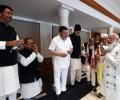
What the leaders said after the all-party meeting called by Prime Minister Narendra Modi in New Delhi on Thursday.

While the row over allowing women into the AMU library has been wrongly portrayed, it does not mean gender biases are non-existent in AMU. The campus does have its own shares of all kinds of cultural and ideological prejudices prevalent in the world outside. The AMU campus is not a segregated island, says Mohammad Sajjad.

True, Azam Khan is being targeted rather disproportionately and also because of his Muslim identity. That must be protested and resisted. But to say that he is a big messiah, and his profit-making educational enterprise is an issue concerning all Muslims of India, is absolutely unjustified, assert Mohammad Sajjad and Md Mohammad Zeeshan Ahmad.

The administration of the union territory as directed by the Jammu and Kashmir high court to make public land given under the controversial Roshni land scheme, since scrapped by a court, came out with the list of beneficiaries.

The man behind Aligarh Muslim University 200 years on.
The hounding of former AMU students by some alumni over their 'wining and dining' during Ramzan is deeply disturbing, says AMU Professor Mohammad Sajjad. 'Intolerance, irrationality, bigotry, religious/sectarian hatred, and all such pernicious tendencies must be fought and resisted, more particularly by university campuses, in order to build a better society.' 'Have we, as academics, failed, and that too, quite miserably?' he asks. 'I feel like confessing and saying yes, we have indeed failed.'
AMU has once again been pulled into a crossfire of crass political opportunism. In these post-truth times, that the university also had political stirrings not subscribing to the Muslim League is chosen to be forgotten, says Mohammad Sajjad.

India's majoritarian regime is now making a dangerously fast-paced move towards theocracy, like its western counterpart did a few decades ago, warns Mohammad Sajjad.

'This is basically aimed at vilifying Nehruvian ideals.' 'Why?' 'Because, Nehruvian leadership is seen by Hindutva forces as the one which did not let them have their Hindu Raj.' 'The Hindutva proponents have always assumed that had Sardar become the first prime minister, India could never have become a secular State,' says Mohammad Sajjad.

India's Muslims need to assert their educational and economic upliftment and political empowerment rather than be provoked by communal remarks, says Mohammad Sajjad, reflecting on the Malda riot.
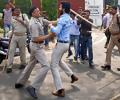
'Besides electoral opportunism, a sustained vilification of AMU on one or the other pretext helps them sustain their 'everyday communalism', the new strategy of the BJP of the Narendra Damodardas Modi-Amit Anilchandra Shah era,' says Mohammad Sajjad.
Articulate segments of Muzaffarpur have been at the the forefront of all anti-establishment mobilisation, which makes their silence over the atrocities in a shelter home in the town puzzling. Could it be that if those accused of horrific crimes belong to dominant castes and if the victims belong to the vulnerable groups, then the middle classes become mute, asks Mohammad Sajjad.

With the results of the Jammu & Kashmir assembly elections out, hectic lobbying among the political parties has started, with a visible sign of the People's Democratic Party and the Congress warming-up to form the government.

'Communalism and communal riots happened in India only during and due to colonialism. Pre-colonial India didn't have this problem of communal conflicts and religious strife.'

'The BJP politics of appropriating icons from its ideological adversaries could only be a desperate attempt to extend the Jat-Muslim divide in Uttar Pradesh. Why this desperation when it can comfortably get votes on the plank of economic development?'

What does one deduce from this silence? That the minorities in the BJP era have been muted, perhaps even coercively, asks Sajad Ahmad Dar.
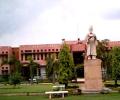
Attorney General Mukul Rohatgi's stand that AMU is not a minority university reveals the anti-minority stand of the political party now in power, says Mohammad Sajjad, outlining the long history behind one of India's premier universities.

'By resorting to divisive issues, the BJP is giving the impression that even if it is voted to power it won't do anything new to give Bihar a facelift. It will repel voters with the belief that the BJP can't do anything without communal polarisation as its core ideology. This is sad and unfortunate,' says Mohammad Sajjad.
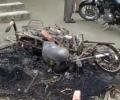
'The horrific episode of January 18 in Muzaffarpur, Bihar, is quite different from what happened in Muzaffarnagar, UP, in September 2013. The Akhilesh Yadav-led administration in UP and riot-mongers among our political formations need to learn lessons from the response of the state and society in Bihar's Muzaffarpur,' says Mohammad Sajjad.
Muslims constitute 20% of UP's electorate. Currently, Muslim voters are divided between Akhilesh's SP and Mayawati's BSP. What will tilt the balance? Can Muslims back the winning party? Mohammad Sajjad explains the mysteries of UP's Muslim politics.

The 'secularists'are more adept at the politics of intense and alarmingly exaggerated fear-mongering, as this kind of politics provides easy votes of Muslims without making them answerable for the concrete issues of poverty, unemployment, lawlessness, and of basic needs like roads, electricity, etc, which is exactly how Nitish Kumar was defeated in the elections, says Mohammad Sajjad.
 © 2026 Rediff.com - Advertise with us - Disclaimer - Privacy Policy - Sitemap - Feedback - About us - Terms of use - Grievances